Patio Cover Extension: Complete Guide to Design, Benefits, and Modern Outdoor Living
A patio cover extension is more than a simple roof addition; it is a functional and stylish way to transform your outdoor space into a year-round living area. Whether attached to your home or built as a freestanding structure, a cover extension offers shade, protection from the elements, and an inviting atmosphere for relaxation or entertaining.
Homeowners increasingly choose patio cover extensions as part of modern backyard design. They not only extend usable space but also improve property aesthetics and add long-term value. With countless design options and material choices, a patio cover extension can be customized to fit every lifestyle and architectural style.
Understanding Patio Cover Extensions
Patio cover extensions are structures designed to provide shade and shelter over patios or decks, creating a comfortable outdoor environment. Unlike temporary awnings or umbrellas, they are permanent solutions that can withstand weather conditions while blending seamlessly with a home’s design.
Most patio covers are built from wood, aluminum, or composite materials, offering durability and customization. Some designs are open beam for an airy feel, while others are solid roof extensions for complete coverage. The choice depends on how the space will be used, whether for outdoor dining, lounging, or even hosting events.
Design Inspiration for Patio Cover Extensions
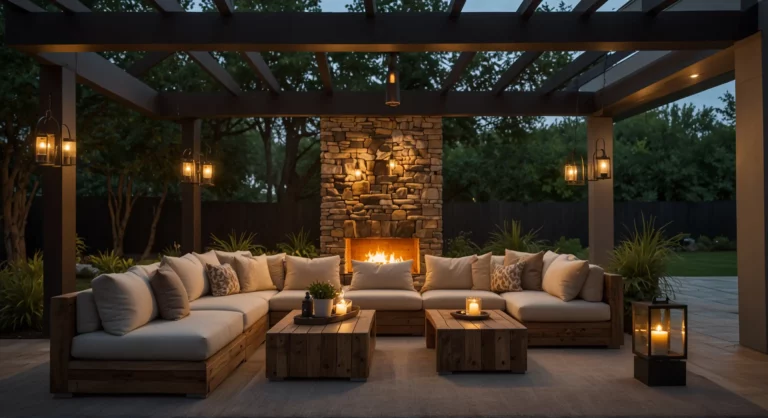
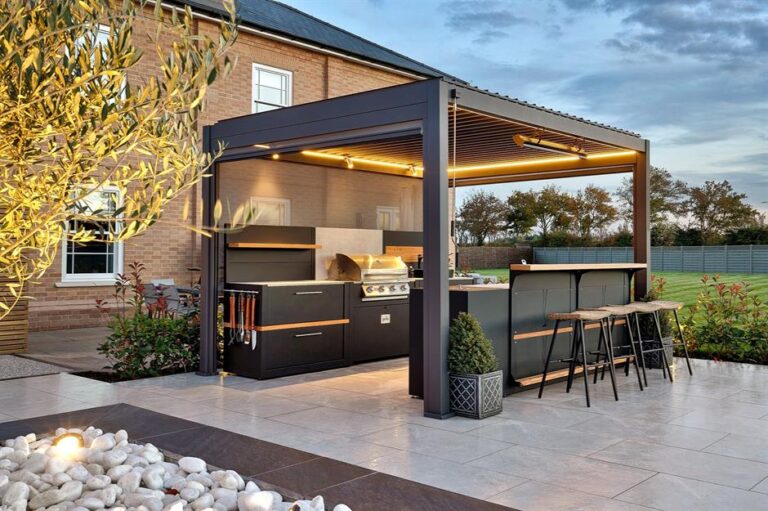
The beauty of a patio cover extension lies in its versatility. For example, homeowners who prefer a modern aesthetic may opt for sleek aluminum covers with clean lines and integrated lighting. Those who enjoy a rustic style might choose natural wood beams paired with stone pillars for a warm and classic look.
Adding features like skylights, pergola-style beams, or retractable panels can enhance both design and functionality. A well-designed patio cover extension can transform a backyard into an elegant retreat that feels like a true extension of the home.
Materials and Construction Considerations
When building a patio cover extension, selecting the right materials is key. Wood offers natural charm and can be stained or painted to match any home style, though it requires periodic maintenance. Aluminum and vinyl are low-maintenance options, resistant to rot, insects, and weather damage.
Composite materials are gaining popularity for their balance of aesthetics and durability. Regardless of the material, proper installation is critical. Structural integrity, waterproofing, and compatibility with the existing home must be carefully planned to ensure long-term performance.
Benefits of a Patio Cover Extension
A patio cover extension provides more than just shade. It expands usable living space, creating an outdoor area that feels like an extension of the interior. Families can dine outside, host gatherings, or simply relax under a comfortable shelter.
Additionally, a well-designed cover extension protects furniture from the sun and rain, reducing wear and tear. It also increases property value by enhancing curb appeal and showcasing a functional outdoor lifestyle, a feature many buyers seek in today’s housing market.
Technology Integration in Patio Cover Extensions
Technology is transforming patio cover designs into smarter and more adaptable spaces. Many modern extensions feature integrated LED lighting systems, which allow homeowners to create the perfect ambiance for any occasion. Smart lighting can even be controlled via mobile apps or voice assistants.
Other innovations include motorized retractable covers, weatherproof speakers, and built-in heating systems. These features allow year-round use and elevate outdoor comfort. For homeowners seeking sustainable solutions, solar-powered lighting and energy-efficient materials provide eco-friendly benefits without compromising performance.
Real-World Examples of Patio Cover Extensions
1. Wooden Patio Cover with Skylights
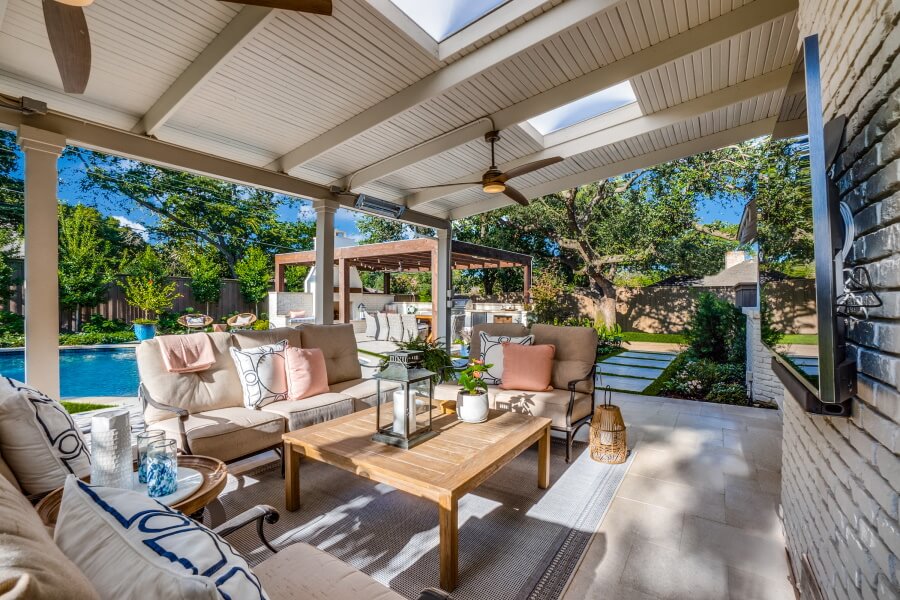
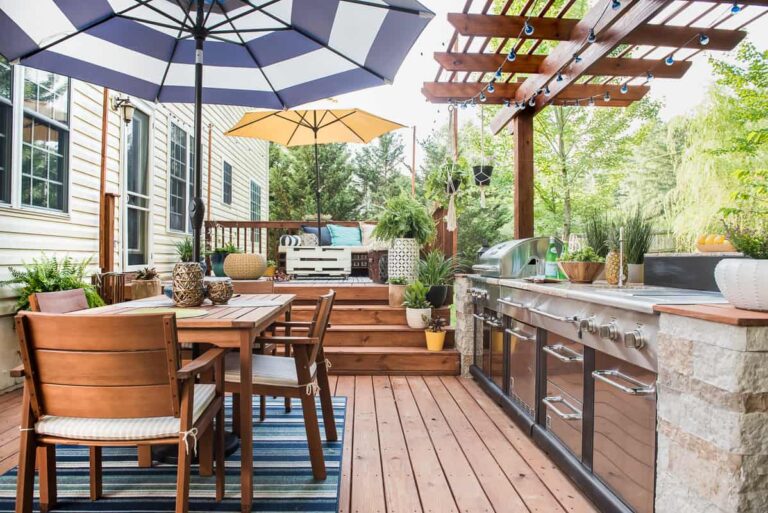
A classic example is a wooden cover extension featuring skylights for natural light. This design combines the warmth of natural materials with functionality, offering both shade and brightness. It’s ideal for homeowners who want to preserve an open, airy feel while enjoying weather protection.
2. Aluminum Patio Cover with Retractable Panels
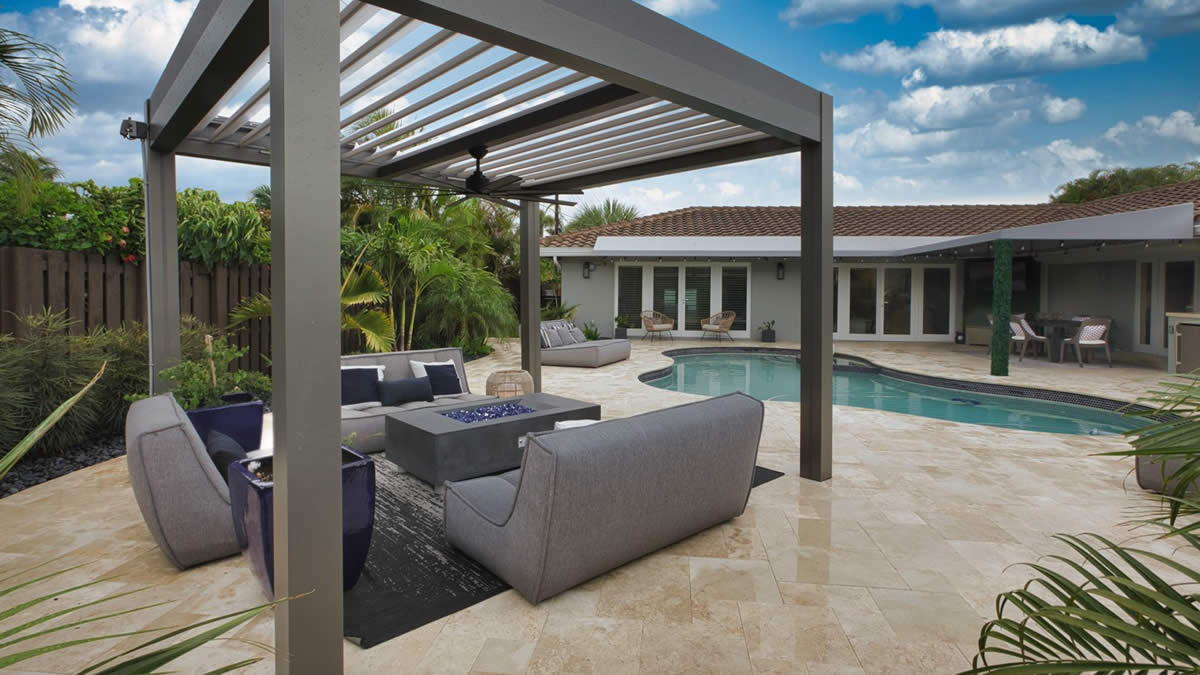
In a more modern approach, an aluminum patio cover with retractable panels offers flexibility. Homeowners can adjust the panels to allow sunlight during cooler days or close them for full coverage in the rain. This style suits families who want control over their outdoor environment.
3. Rustic Patio Cover with Stone Columns
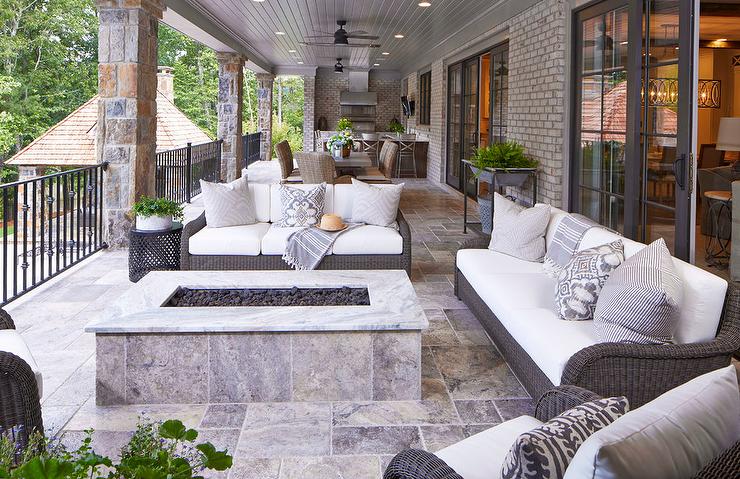
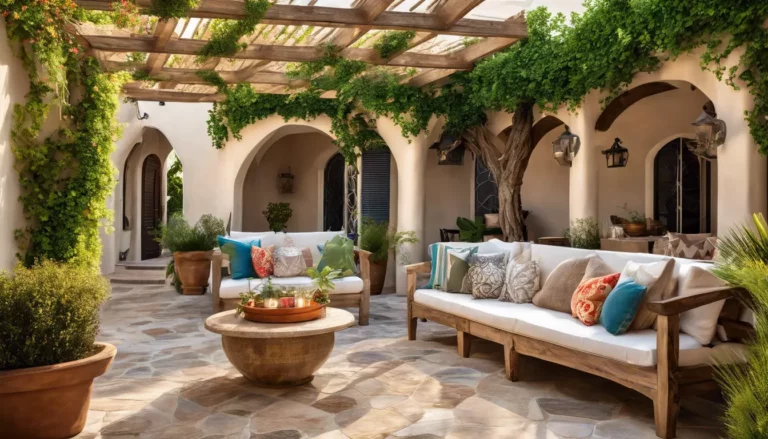
For a timeless appeal, some homeowners choose rustic wooden beams supported by stone or brick columns. This design creates a strong architectural statement, turning the patio into a centerpiece of the backyard. It’s especially popular for countryside or traditional-style homes.
4. Modern Patio Cover with Integrated Lighting
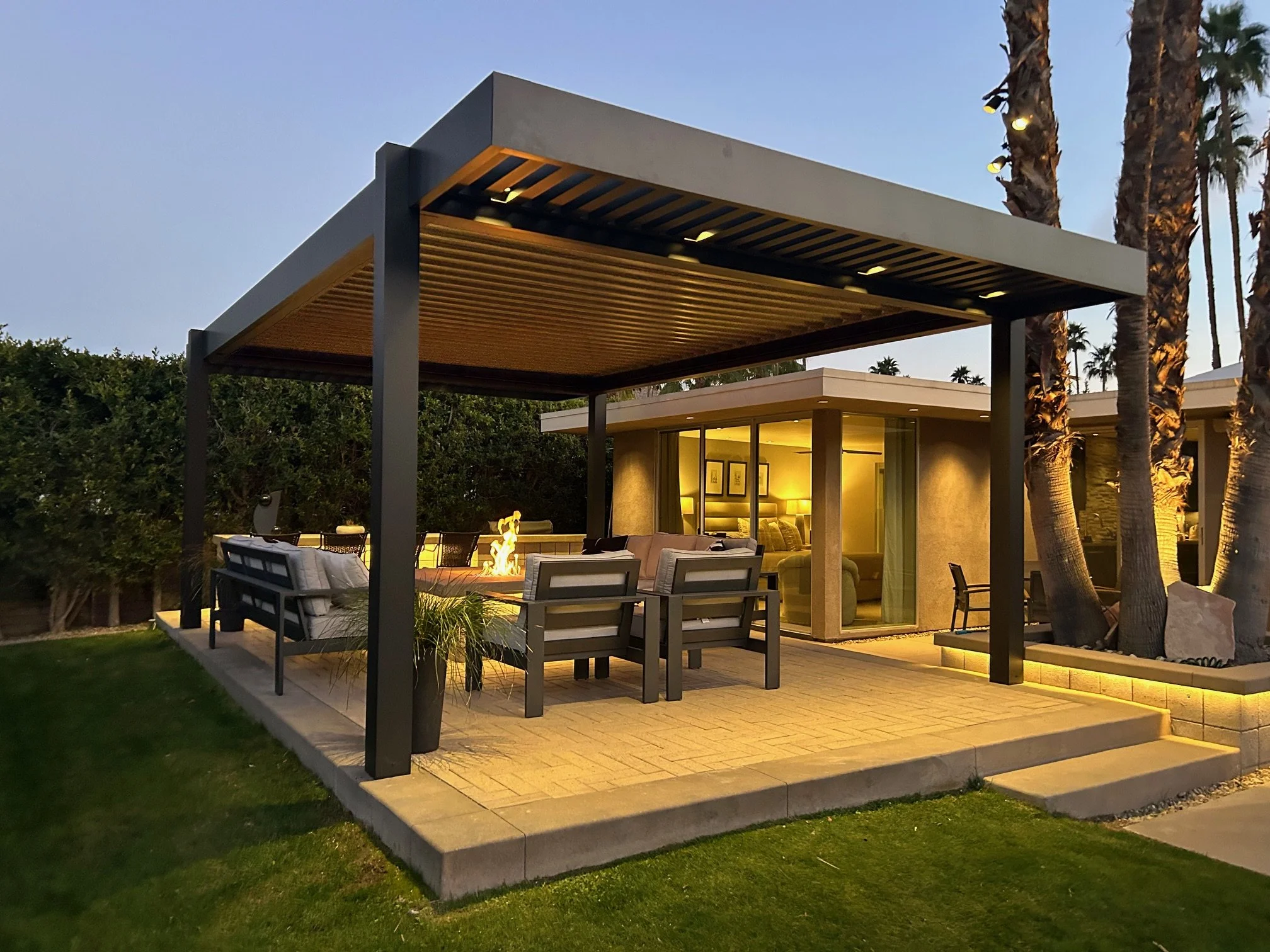
Another real-world example is a sleek modern extension with built-in LED strips along the beams. At night, the patio transforms into a cozy and functional gathering space. This setup highlights how lighting technology can completely change the atmosphere of an outdoor area.
Use Cases for Patio Cover Extensions
A patio cover extension is highly versatile in addressing everyday needs. For families who love outdoor dining, the cover creates a protected dining area that can be used regardless of the weather. For entertainers, it provides a spacious hub for parties and celebrations.
In hot climates, the extension shields residents from harsh sun, making outdoor living more comfortable. In rainy areas, it ensures the patio remains usable year-round. Beyond lifestyle improvements, cover extensions also reduce cooling costs by providing shade that lowers indoor temperatures.
Practical Advantages of Patio Cover Extensions
Practicality is one of the strongest reasons to invest in a patio cover extension. Furniture, flooring, and décor are shielded from direct exposure, extending their lifespan. Covered areas also provide additional storage or a functional outdoor workspace.
From an architectural standpoint, patio cover extensions seamlessly bridge indoor and outdoor areas. They create visual continuity, making homes appear larger and more cohesive. With modern low-maintenance materials, upkeep is minimal, ensuring homeowners enjoy the benefits without added hassle.
Conclusion
A patio cover extension is more than a backyard upgrade; it is a lifestyle investment. From wooden beams with skylights to modern aluminum structures with retractable features, these extensions provide flexibility, comfort, and long-term value. With proper design, materials, and technology, homeowners can transform patios into functional spaces that enhance everyday living.
Frequently Asked Questions
1. How is a patio cover extension different from a pergola?
A pergola typically provides partial shade with open beams, while a patio cover extension offers full coverage and protection from sun and rain.
2. What materials are best for patio cover extensions?
Wood is ideal for a natural, rustic look, while aluminum and vinyl are low-maintenance and durable. Composite materials offer a balance between aesthetics and long-term performance.
3. Does a patio cover extension increase home value?
Yes, adding a patio cover extension can significantly boost property value by creating additional functional space and enhancing curb appeal.